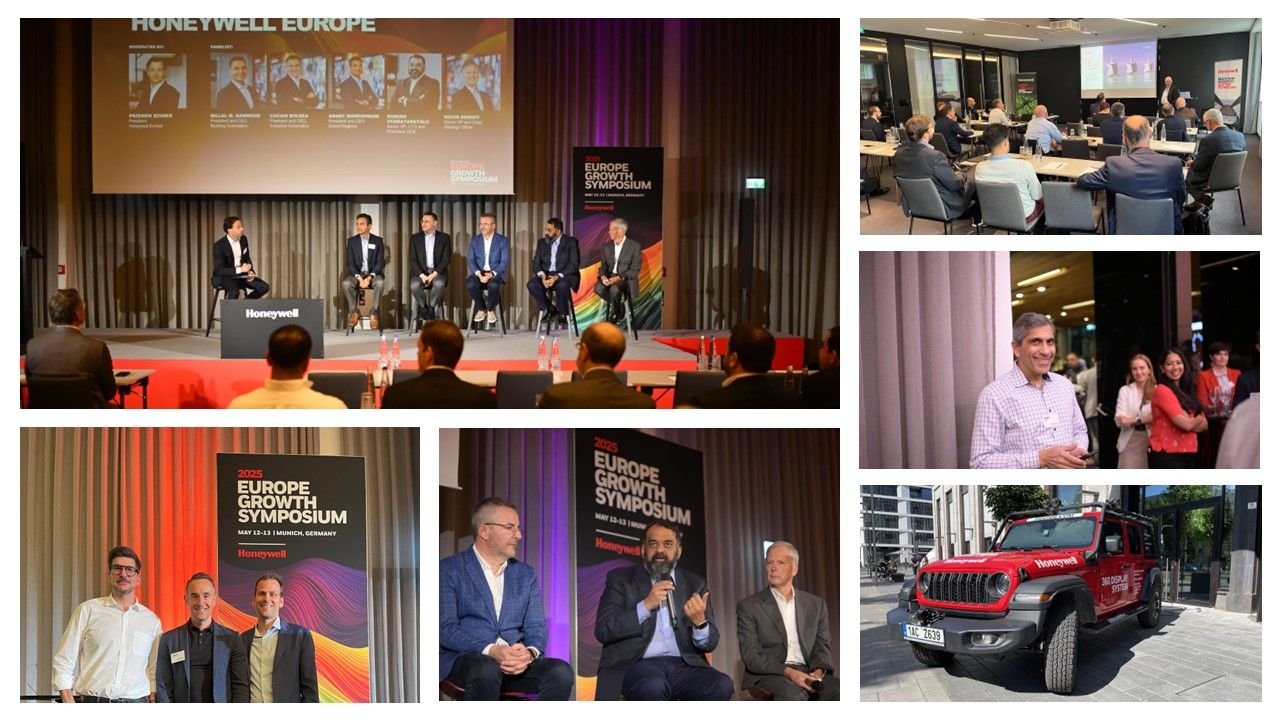
Why PowerPoints needed to die to foster real growth
Honeywell is an engineering-led organisation. Its teams are technically sophisticated and deeply invested in the solutions they build. But when it came time to present growth projects to leadership, the conversation had a recurring pattern.
Teams would spend weeks preparing a single PowerPoint slide, what they called a "one-pager", iterating it across stakeholders, refining the message, and rehearsing the pitch. Then they would arrive at the investment review and, as Maxwell Johnson put it, "get hosed."
The problem was not effort. It was orientation. Teams naturally defaulted to talking about their technology, why Honeywell could build something others could not. Customer evidence, when it existed, was limited to voice of customer: interviews and surveys capturing what people said they wanted.
"Our customer evidence began and ended with what folks said."
Maxwell Johnson, Senior Director of Product Management, Honeywell
Leadership, meanwhile, wanted to grill the teams, in a positive way, to make sure they truly understood the market. But without a shared framework, those conversations defaulted to scrutinising technical details, whether commercial or engineering. The most fundamental business questions, who is the real customer, what problem are we solving, and do we have proof anyone will pay for this, often went unasked.
Several projects were flagged internally as "too big to fail." Yet no one had a clear way to assess how much real market evidence supported them.
From shadow pre-work to structured artifacts in three weeks
Strategyzer and Honeywell co-created a playbook, not a deck template, but a step-by-step process that guided teams through the fundamental business questions before the growth symposium.
The design principle was simple. Skip the lengthy e-learning. Get teams applying concepts to real projects immediately.
"Nobody has time for e-learning. We immediately got the teams to work, map out a customer, map out a business model, map out the unknowns."
Alex Osterwalder, Founder & CEO, Strategyzer
Teams prepared five business artifacts on the Strategyzer platform:
- Customer ecosystem map, identifying end users, decision-makers, purchasing departments, and channel partners, then selecting the most critical stakeholder for the idea to succeed
- Customer profile, the top jobs, pains, and gains for that key stakeholder
- Value scenes, a storyboard showing how the project creates value for the customer
- Business model and financial prototype, a simple three-year projection of revenue, costs, and required investment
- Known unknowns, an explicit map of what the team still does not know

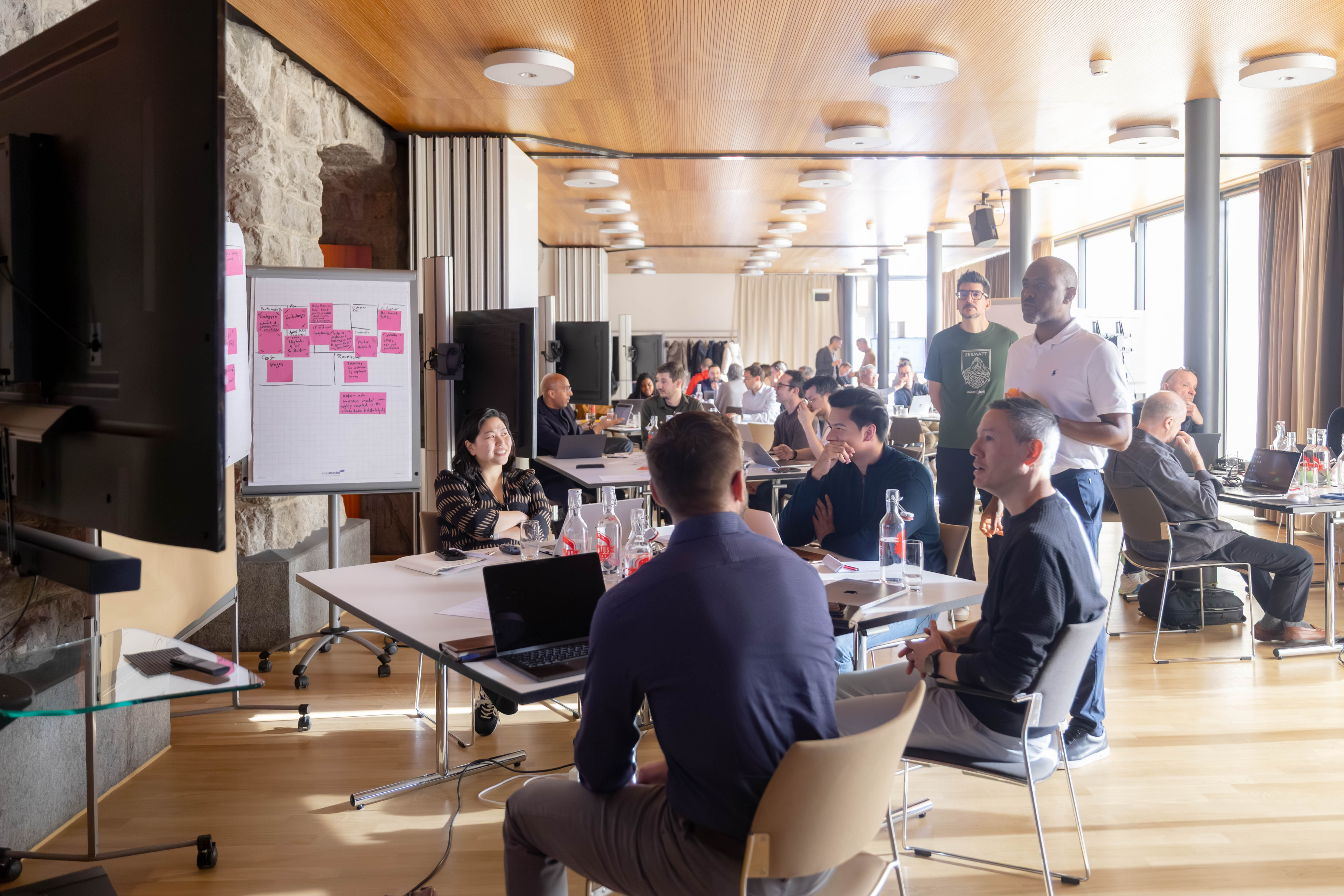
Maxwell Johnson and his colleague Larry Marturano coached 10 to 15 teams per symposium through three weeks of pre-work. Previously, they would review a finished one-pager and send back a wall of feedback. Teams would then reverse-engineer corrections back to the beginning.
The playbook changed this. Because the work was decomposed into individual artifacts on the platform, coaches could give feedback at each step, asynchronously, at the moment of need.
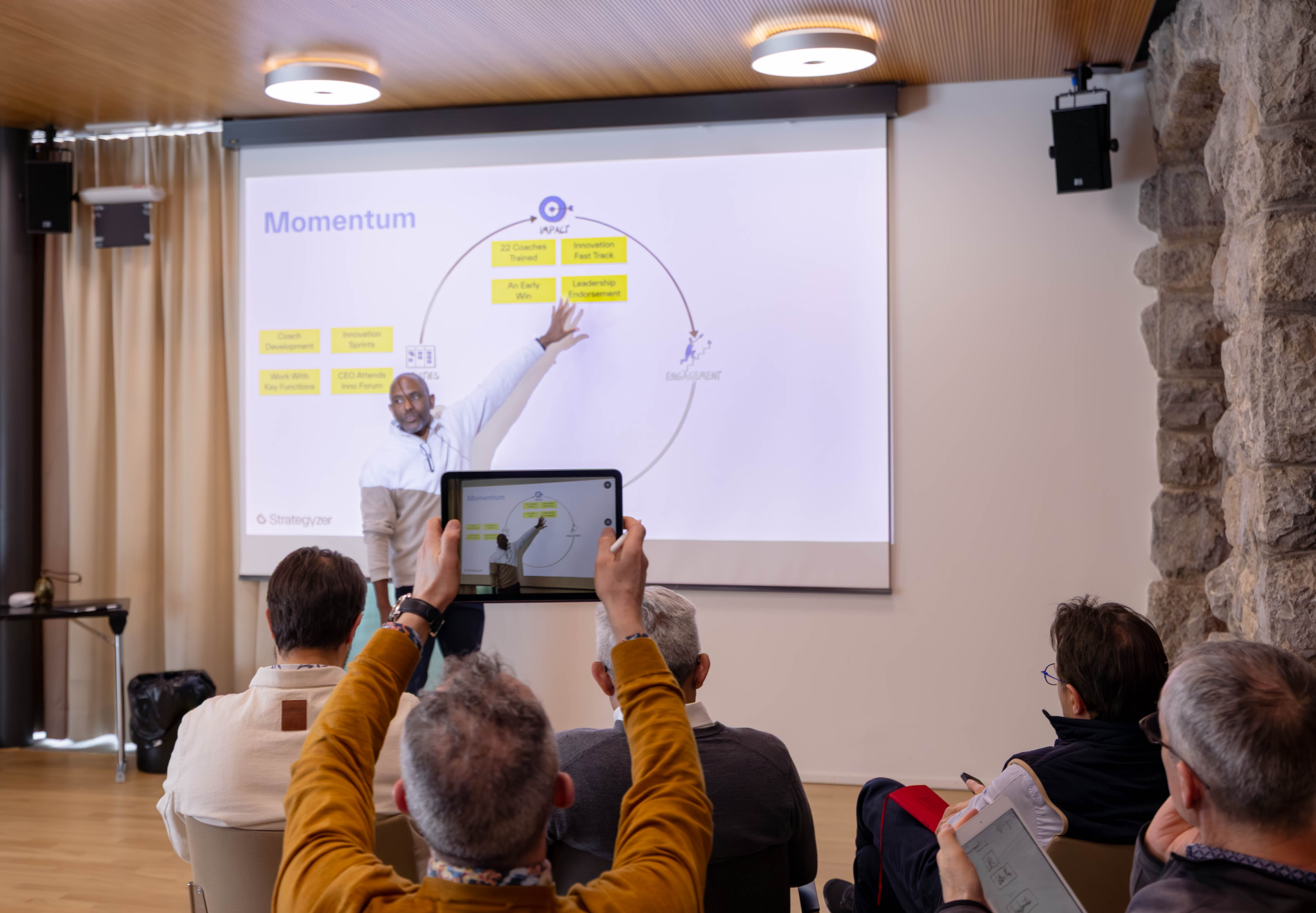
At the symposium itself, slides were banned. Teams presented directly from their artifacts on the platform. The format was tight: 30 seconds on the big idea and customer, one minute on jobs, pains, and gains, 30 seconds on the evidence supporting their customer understanding, then the value proposition, financials, and remaining unknowns.
Each section was accompanied by an evidence score. Teams had to show what level of evidence they had, from level one (customer opinions) to level five (real-world customer behaviour), for each aspect of their idea.
Watch: Inside the Honeywell growth symposium with Alex Osterwalder and Maxwell Johnson
From our webinar with Maxwell Johnson, Senior Director of Product Management at Honeywell. Watch the full session